
Why Are My Legs Purple And Blotchy?
You catch a glimpse of your legs, maybe in the shower, under bright lights, or after a long day – suddenly something feels off. You notice uneven color, like patches, purplish tones, or in a marble pattern, you may wonder – why are my legs purple and blotchy? Is it something serious?
For many, it’s more than just appearance; it can cause worry when symptoms like mottled skin, red splotches on legs, or purple legs keep coming back. At Karishma Vein Clinic, patients often share this same concern, unsure if it’s temporary or a sign of something deeper.
Your skin can reveal a lot about your circulation. This blog gives you clarity on ‘why are my legs blotchy purple and red’ and steps to overcome skin discoloration on legs.
What does mottled skin or marbling of the skin mean?
When blood pools in the veins due to gravity or weakened vein valves, it loses oxygen, turning a deep crimson or bluish-purple. This results in visible purple legs and a patterned appearance often referred to as mottled skin, often raising the question why are my legs purple and blotchy. Understanding whether these marks are temporary or persistent is the first step in determining the right lower leg discoloration and swelling treatment.
While occasionally it can be temporary and harmless, persistent skin discoloration on legs accompanied by swelling, pain, and heaviness may indicate a vascular condition.
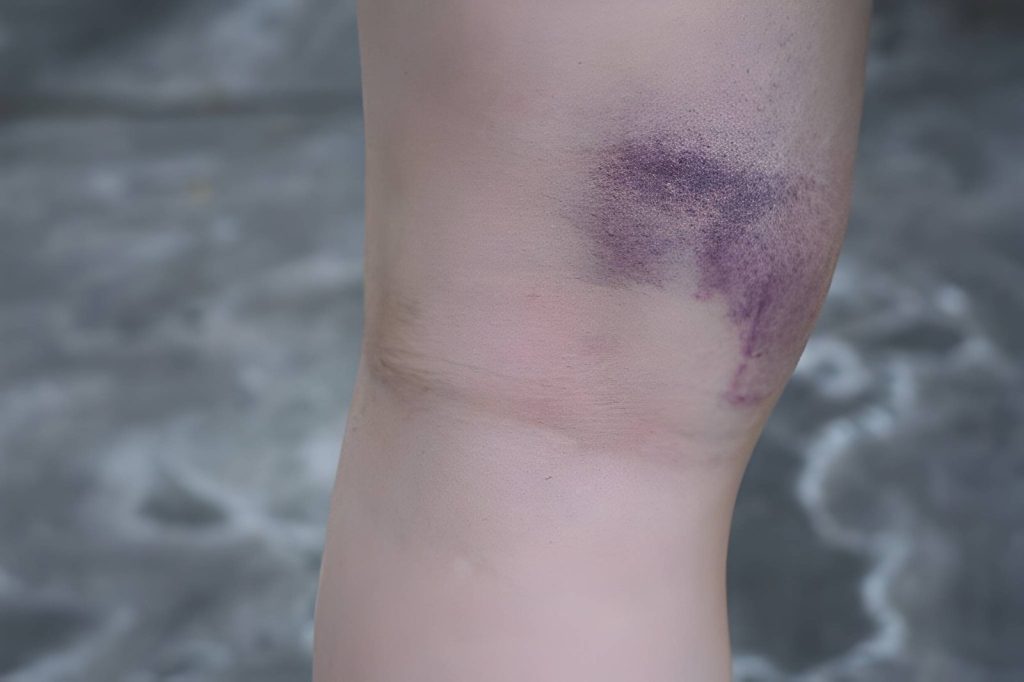
What causes blotchy skin on legs? A closer look
What causes blotchy skin on legs? Let’s break down the reasons:
- Circulatory Disorders – Conditions affecting blood flow can lead to blotchy skin and uneven discoloration of lower legs
- Blood Pooling – blood pooling in veins can cause legs turn purple when standing and feet turning purple when sitting
- Inflammation or Skin Conditions – Some dermatological issues can mimic vascular problems, leading to red splotches on legs and patchy discoloration of skin.
Why are my legs purple and blotchy? Explaining the common causes
Chronic venous insufficiency – CVI
The most common cause of discoloration of lower legs is poor vein function, or chronic venous insufficiency. When leg veins weaken, blood doesn’t flow upward and starts pooling in the legs. The extra pressure causes red blood cells to leak into the surrounding tissue, leaving brownish-purple stains.
Swelling almost always goes hand-in-hand with this condition, which is why lower leg discoloration and swelling treatment is often recommended.
Varicose veins and spider veins
The enlarged, twisted veins beneath your skin often cause red splotches on legs and a bluish web-like discoloration. It’s often linked to varicose veins and spider veins, which can affect circulation.
At Karishma Vein Clinic, we use advanced, US FDA-approved procedures such as Endovenous Laser Treatment (EVLT) and sclerotherapy to treat varicose veins and spider veins, which are minimally invasive and don’t require general anesthesia.
Livedo reticularis (mottled skin)
This condition causes a lace-like pattern known as mottled skin or marbling of the skin. It may become more noticeable in cold temperatures or due to vascular issues.
If you’re wondering why are my knees purple, this is often a common reason behind that discoloration. In some cases, it’s harmless. It can also be linked to underlying issues like autoimmune conditions or blood disorders, which may need further evaluation.
Deep vein thrombosis (DVT)
A blood clot forming in a deep leg vein can cause sudden, localized purple or blue skin discoloration on legs along with warmth, swelling, and tenderness. DVT is a medical emergency; if you suspect it, seek care immediately.
Feet turning purple when sitting: Should you be concerned?
If you notice feet turning purple when sitting or persistent purple feet, it could indicate:
- Circulatory inefficiency
- Venous insufficiency
- Early vascular disease
Occasional color change may not be serious, but frequent symptoms should not be ignored, especially if paired with discoloration of lower legs.
When should you worry about purple legs or discoloration of skin?
Not every instance of blotchy skin on legs demands urgent attention, but if you’re wondering why are my legs purple and blotchy, certain symptoms should prompt you to see a vein specialist.
- Purple legs accompanied by swelling, warmth, or pain
- Discoloration of lower legs that worsens over weeks or doesn’t resolve
- Legs look blotchy after exercise or prolonged standing
- Feet turning purple when sitting, combined with numbness or tingling
- Open sores, skin breakdown, or venous ulcers near the ankle
- Skin that feels hard, leathery, or thickened around the lower leg
- Sudden and unexplained red splotches on legs with rapid spreading
Also Read – Why Are My Veins Suddenly So Visible?
Why do my legs turn purple when I shower or stand?
These symptoms are often linked to how your blood vessels react to heat and gravity.
Heat exposure (shower)
Hot water dilates blood vessels, which can:
- Increased visibility of marbling of the skin
- Cause temporary blotchy skin on legs
Gravity (standing)
Standing for long periods may lead to:
- Blood pooling
- purple legs
- Increased skin discoloration on legs
Who is at risk of blotchy or purple legs?
Certain factors can increase your chances of developing blotchy skin on legs, purple legs, or ongoing skin discoloration on legs:
- People who sit or stand for long hours
- Aging individuals
- Pregnancy
- Obesity
- Family history of vein disease
How to get rid of lower leg discoloration - treatment options?
If you’re searching for how to get rid of lower leg discoloration, the solution depends on the underlying cause.
Lifestyle modifications
- Elevating legs while resting to improve venous return
- Wearing medical-grade compression stockings
- Regular low-impact exercise like walking or swimming
- Avoiding prolonged sitting or standing without breaks
- Weight management to reduce vascular pressure
Medical and minimally invasive treatments
At Karishma Vein Clinic, advanced treatments are tailored to address the root cause of skin discoloration on legs:
- Endovenous Laser Treatment (EVLT) – The gold standard treatment for lower leg discoloration and swelling caused by varicose veins. Karishma Vein Clinic uses German Diode Laser technology for precision and safety, ensuring pain-free, minimal scarring procedures.
- Sclerotherapy – An injection-based treatment ideal for spider veins and the red splotches on legs they produce. The solution causes the vein to collapse and fade.
- Compression therapy – First-line management for CVI-related discoloration of skin on the lower legs.
- Surgical correction – For complex or advanced cases, our clinic offers expert surgical intervention.
Quick recap: What your symptoms might meanHere’s a quick breakdown:
|
Why choose Karishma Vein Clinic for expert vein care?
“Why are my legs purple and blotchy?” This unsettling skin change can range from harmless temporary mottling to serious vascular conditions.
At Karishma Vein Clinic in Pune, patients receive expert care for varicose veins, spider veins, and lower leg discoloration through advanced laser treatments. With over 25 years of clinical excellence and more than 1,000 successful cases, the clinic is a trusted destination for comprehensive vein care.
If you’ve been struggling with blotchy skin on legs, skin discoloration on legs, or any related symptoms, our team is here to help you find real answers, not just temporary relief.
Don’t ignore what your legs are telling you – Get expert vein care
Stop wondering why your legs look blotchy or discolored. Get answers and a personalized treatment plan from Pune’s most trusted vein specialists.
Book your consultation today and get clearer-looking legs.
Frequently Asked Questions
Why are my legs purple and blotchy all of a sudden?
Sudden blotchy skin on legs may result from temperature changes, circulation issues, or underlying vein conditions—explaining why are my legs purple and blotchy.
Is mottled skin dangerous?
Mottled skin or marbling of the skin can be harmless in some cases, but persistent symptoms may indicate vascular problems.
Can vein issues cause skin discoloration on legs?
Yes, vein disease is one of the leading causes of skin discoloration on legs and discoloration of lower legs.
How to get rid of lower leg discoloration permanently?
Professional treatments at specialized clinics like Karishma Vein Clinic can effectively address the root cause of discoloration of skin.
Are purple feet a sign of something serious?
Purple feet can range from benign (cold-induced vasoconstriction) to serious (DVT or peripheral artery disease). If your feet turn purple when sitting for long periods, or if the color is accompanied by pain or swelling, a vascular evaluation is essential.