
Am I a Candidate for EVLT Surgery? 5 Signs You Need Laser Vein Treatment
Aching, heavy legs by the end of the day. Bulging, rope-like veins that seem to get more noticeable every year. Swelling around the ankles that lingers even after a good night’s rest.
If any of this sounds familiar, you are not alone, and you are not imagining it. Varicose veins are one of the most common vascular conditions worldwide. While they are often dismissed as a cosmetic concern, they can quietly affect comfort, mobility, and confidence over time.
The good news is that varicose veins no longer mean months of downtime or a scalpel. Modern laser treatment for varicose veins has made it possible to correct the underlying problem with a quick, walk-in, walk-out procedure.
But how do you know if you actually need it, or whether your symptoms can wait? This guide breaks down five clear signs that point toward EVLT surgery, along with everything you should know before making a decision.
Understanding Varicose Veins Before you Decide
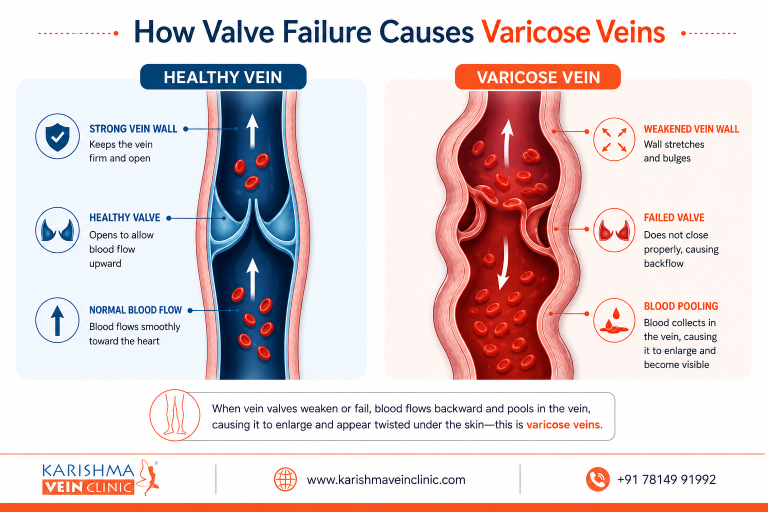
Varicose veins occur when the small valves within the veins become weak or fail to close properly.
Rather than flowing efficiently back to the heart, the blood accumulates in the lower legs, causing the veins to stretch, twist, and bulge beneath the skin.
Left untreated, this can progress from a mild cosmetic issue to a source of chronic discomfort and, in some cases, skin changes or ulcers.
A fact worth remembering: varicose veins tend to run in families, and studies suggest genetics play a role in nearly half of all cases. That means if a parent or sibling has them, keeping an eye on early symptoms is a smart move.
5 Signs You May Need EVLT Surgery

Not every visible vein needs treatment right away, but certain symptoms suggest it is time to speak with a vein specialist about EVLT surgery.
- Persistent leg pain or heaviness that worsens in the evening or after long hours of standing or sitting.
- Visible, bulging, or twisted veins that have grown larger or more numerous over time.
- Swelling in the ankles or lower legs that does not fully resolve overnight.
- Skin changes near the ankle, such as discoloration, dryness, itching, or thinning skin.
- Throbbing, cramping, or a restless, uncomfortable sensation in the legs, especially at night.
If two or more of these apply to you, it is a strong indicator that your varicose veins have moved beyond a cosmetic concern and into a condition that could benefit from evaluation for laser vein treatment.
What is EVLT Surgery?
EVLT, short for endovenous laser treatment, is a minimally invasive procedure used to close off the diseased vein causing your varicose veins.
Rather than removing the vein surgically, a thin laser fiber is inserted into the vein through an access point.
Controlled laser energy heats the vein wall from the inside, causing it to seal shut. Blood is then naturally rerouted through healthier veins around, and the treated vein is gradually absorbed by the body over the following weeks.
EVLT surgery is performed under local anesthesia, takes under an hour, and does not require an overnight hospital stay.
It has become one of the most widely used forms of varicose veins laser treatment globally because of its precision, safety profile, and minimal disruption to daily life.

What to Expect During Recovery
- Immediately after: A compression stocking or bandage is applied. You will usually be encouraged to walk for 15–20 minutes.
- First 24–48 hours: Mild tightness, warmth, pulling, or light bruising may occur along the treated vein.
- First week: Wear compression stockings as advised, usually for 5–7 days. Most people return to desk work within 1–2 days.
- Weeks 2–3: Bruising and firmness gradually improve. A follow-up ultrasound may be done to confirm that the vein has closed.
- Activity: Walking and light movement are encouraged. Avoid lifting heavy weights, high-intensity exercise, prolonged standing, and long-haul flights for about 1–2 weeks, or as advised.
- Complete recovery: Bruising and firmness may take several weeks to months to fully disappear, although comfort and visible improvement usually occur much sooner.
Following these guidelines closely, along with attending the scheduled follow-up scans, plays a significant role in achieving the best long-term outcome from EVLT surgery.
Caring for Yourself at Home after EVLT Surgery

Once you leave the clinic, a few simple habits go a long way in supporting a smooth recovery from EVLT surgery:
- Take any prescribed medication exactly as instructed, and complete the full course even if you feel fine.
- Keep the small access site clean and dry, following the specific wound care instructions given at discharge.
- Monitor the access site daily for any unusual signs, such as increased redness, warmth, swelling, or discharge.
- Wear your compression stockings or bandages for the duration recommended, rather than removing them early.
- Keep the treated leg elevated when resting or sleeping, particularly in the first few days.
- Take short walks several times a day to encourage healthy blood flow.
- Hold off on intense workouts, heavy lifting, or standing for extended periods until cleared to do so.
- Postpone air travel until your surgeon confirms it is safe to fly again.
- Avoid hot baths, saunas, steam rooms, or whirlpools while the treated area is still healing, since heat can affect the healing vein.
When to Reach Out to your Doctor
Most recoveries from EVLT surgery are uneventful, but it is important to get in touch with your surgeon promptly if you notice any of the following:
- A temperature of 100.4°F (38°C) or higher, or any fever threshold your doctor has specifically flagged.
- Chest pain or unexplained shortness of breath.
- Signs suggesting infection at the access site, such as spreading redness, swelling, warmth, worsening pain, bleeding, or an unpleasant odor from the site.
- Marked numbness or tingling in the treated leg that does not settle.
- Significant or worsening pain or swelling in the treated leg.
Reporting these symptoms early allows your care team to address them quickly, keeping your recovery on track.
Visit Karishma Vein Clinic for advanced EVLT surgery in Pune
If you recognize even a few of the signs above, it is worth having your veins properly evaluated rather than waiting for symptoms to worsen.
Karishma Vein Clinic, part of Karishma Laser & Cosmetic Clinic, uses an advanced diode laser system to deliver precise, minimally invasive varicose veins laser treatment under the guidance of an experienced surgical team.