
Chronic Venous Insufficiency: Early Detection and Prevention
Veins that are healthy and functioning well are very important for the return of blood to the heart. When the veins are no longer functioning well, the blood flow becomes stagnant, and the blood accumulates in the legs. This condition is referred to as chronic venous insufficiency (CVI). While it may begin with mild discomfort, it can gradually progress into more serious complications if not detected early.
Understanding the warning signs, risk factors, and prevention strategies can help you protect your vascular health. Early awareness of chronic venous insufficiency symptoms allows for timely intervention and better long-term outcomes.
What Is Chronic Venous Insufficiency?
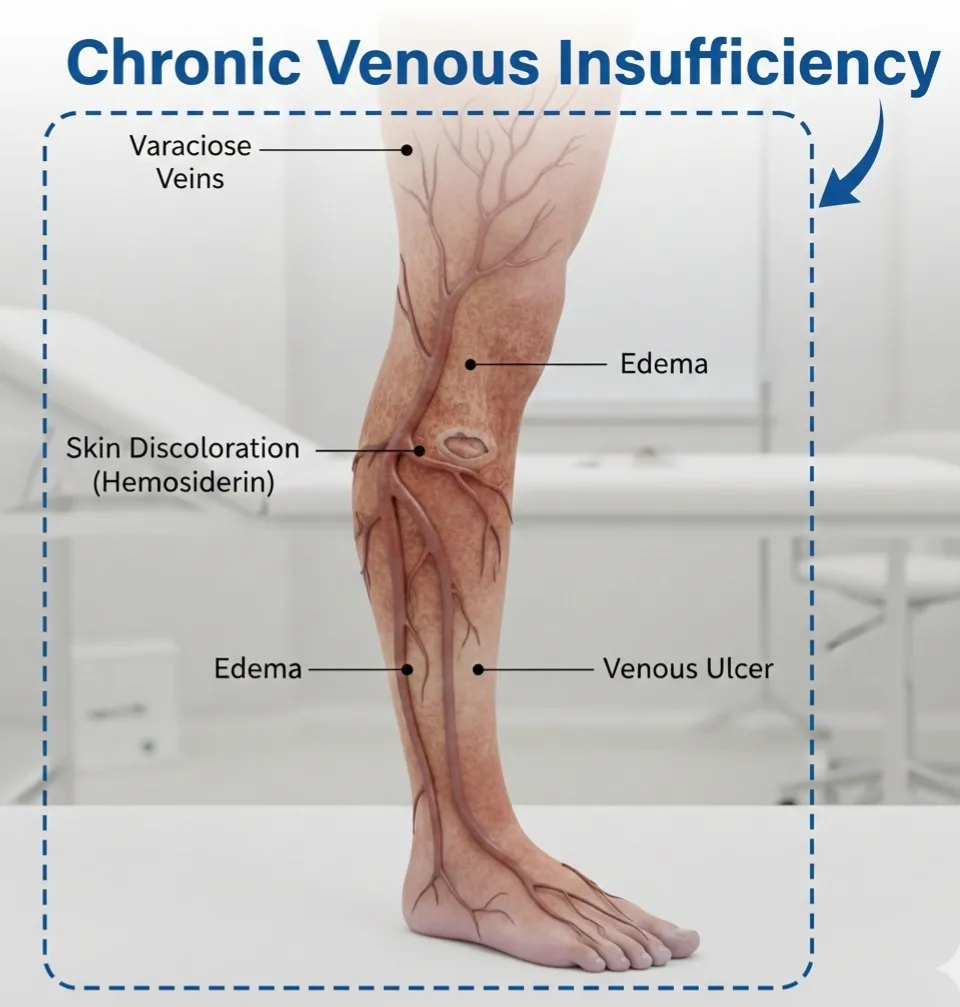
Before diving into symptoms and prevention, it’s important to understand the condition itself. The chronic venous insufficiency symptoms generally describe a disorder where damaged vein valves fail to push blood efficiently upward from the legs toward the heart. As a result, blood collects in the lower extremities. Over time, this pooling of blood increases pressure inside the veins, leading to swelling, skin changes, discomfort, and visible varicose veins. If left untreated, the condition may gradually worsen and significantly impact daily comfort and mobility.
You may also see it referred to as chronic venous insufficiency (peripheral), which emphasizes that it primarily affects peripheral veins, especially in the legs. This distinction helps differentiate it from other circulatory disorders and highlights the importance of early diagnosis and proper vascular care.
What Causes Venous Insufficiency?
A common question patients ask is, what causes venous insufficiency? The answer usually involves malfunctioning vein valves. Healthy veins contain one-way valves that prevent blood from flowing backward. When these valves weaken or become damaged, blood reflux occurs.
Several factors contribute to valve damage, including:
- Previous deep vein thrombosis (DVT)
- Prolonged standing or sitting
- Obesity
- Pregnancy
- Aging
- Family history
These venous insufficiency risk factors increase pressure within leg veins, making it harder for blood to circulate properly.
Early Venous Insufficiency: Why Detection Matters
During the early phases, symptoms may be subtle. Early venous insufficiency may manifest as a mild discomfort in the legs, heaviness, or swelling at the end of the day. Due to the subtlety of the symptoms, many people tend to ignore them.
However, recognizing chronic venous insufficiency symptoms causes early can prevent progression. When left untreated, the condition can worsen and lead to skin damage or ulcers.
Early diagnosis allows for conservative management before more invasive treatment becomes necessary.
What Are Symptoms of Chronic Venous Insufficiency?
You may wonder, what are symptoms of chronic venous insufficiency? The symptoms typically develop gradually and may include:
- Leg swelling (especially around the ankles)
- Aching or throbbing pain
- Heaviness in the legs
- Itching or burning sensation
- Skin discoloration
- Visible varicose veins
These are common chronic venous insufficiency symptoms, and they often worsen after prolonged standing.
Another common concern is: can venous insufficiency cause numbness in feet? While numbness is not the most typical symptom, some patients report tingling or altered sensation due to swelling and pressure on nearby nerves.
Recognizing cvi symptoms early helps reduce the risk of complications.

What Does Venous Insufficiency Look Like?
Patients often ask, “What does venous insufficiency look like?” In the early stages, you may see some swelling and spider veins. As the disease advances, the varicose veins become more noticeable.
In advanced cases, you might see:
- Brown or reddened skin
- Thickened or hardened skin
- Open sores (venous ulcers) around the ankle area
Understanding what does venous insufficiency look like can prompt earlier medical evaluation.
CVI Stages: How the Condition Progresses
Doctors classify the condition into cvi stages, which describe severity:
Stage 1
Spider veins and mild swelling.
Stage 2
Visible varicose veins and more noticeable discomfort.
Stage 3
Persistent swelling without skin changes.
Stage 4
Skin discoloration and thickening.
Stage 5 and 6
Healed or active venous ulcers.
Identifying early venous insufficiency during the first two stages significantly improves management success.
Also Read – Everything About Chronic Venous Insufficiency Stages
Chronic Venous Insufficiency Symptoms Causes
The link between chronic venous insufficiency symptoms is based on the increased pressure in the veins. Pooling of blood in the legs causes the walls of the veins to be stretched. This results in swelling, inflammation, and pain.
The constant pressure on the skin and tissue eventually causes damage. This is why it is important to control the risk factors from the start.
Chronic Venous Insufficiency Symptoms Treatment
When discussing chronic venous insufficiency symptoms treatment, doctors often start with conservative measures. Treatment typically depends on the severity indicated by the cvi stages.
Lifestyle Modifications
- Regular exercise to improve circulation
- Weight management
- Elevating legs above heart level
- Avoiding prolonged standing or sitting
- Compression Therapy
Compression stockings assist in pushing the blood upwards and preventing swelling. They are very effective in the early stages of venous insufficiency.
Medical Procedures
If the symptoms are not relieved by conservative treatments, then minimally invasive procedures like laser therapy, radiofrequency ablation, or sclerotherapy can be advised.
Timely chronic venous insufficiency symptoms treatment can prevent ulcers and long-term complications.
Can Venous Insufficiency Cause Numbness in Feet?
As mentioned earlier, some individuals ask, can venous insufficiency cause numbness in feet? While not a primary symptom, swelling and inflammation may compress nearby nerves, leading to tingling sensations or mild numbness.
However, persistent numbness should be evaluated to rule out other conditions such as neuropathy or arterial disease.
Venous Insufficiency Risk Factors
Understanding venous insufficiency risk factors is key to prevention. Common risk factors include:
- Age over 50
- Female gender
- Pregnancy
- Obesity
- Sedentary lifestyle
- Occupations requiring long hours of standing
If you fall into one or more of these categories, monitoring for chronic venous insufficiency symptoms becomes especially important.
Prevention Strategies
Preventing chronic venous insufficiency (cvi) involves promoting healthy circulation.
Stay Active
Walking helps to strengthen the calf muscles, which are responsible for pushing blood back up to the heart.
Maintain Healthy Weight
Weight loss can help to alleviate the pressure on the veins in the legs.
Elevate Legs
Elevating the legs can help to alleviate swelling.
Wear Compression Stockings
For people who are at risk, compression clothing can help to prevent the progression of early venous insufficiency to more advanced stages of cvi.
When to See a Doctor
If you experience any of the following, then it is time to see a doctor: Swelling, changes in veins, and skin discoloration.
Remember, what are symptoms of chronic venous insufficiency may seem mild at first, but they can worsen over time. Prompt care reduces the likelihood of ulcers and long-term discomfort.
Choosing the Right Treatment for You
Chronic venous insufficiency (cvi) is a progressive condition that affects circulation in the legs. Recognizing chronic venous insufficiency symptoms, understanding what causes venous insufficiency, and addressing venous insufficiency risk factors early can prevent complications.
Knowing what does venous insufficiency look like helps individuals identify warning signs before the condition advances through the later cvi stages. Through proper lifestyle adjustments and timely chronic venous insufficiency symptoms treatment, many people manage symptoms effectively and maintain a good quality of life.
If you suspect symptoms of chronic venous insufficiency, do not ignore them. Early detection and prevention are the most powerful tools in protecting your vascular health.
Book a Consultation at Karishma Vein Clinic Today!!